Overview:-
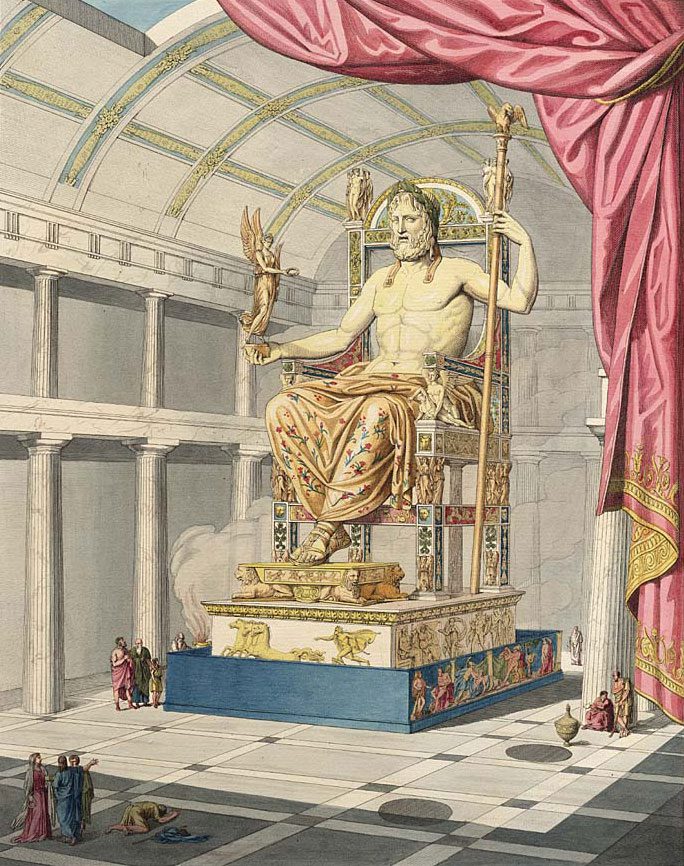
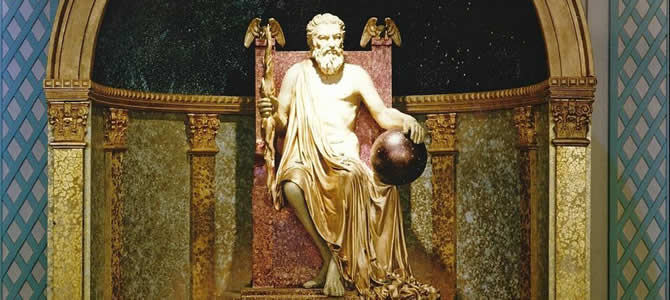
- The Statue of Zeus at Olympia was a giant seated figure, about 13 m (43 ft) tall, made by the Greek sculptor Phidias around 435 BC at the sanctuary of Olympia, Greece, and erected in the Temple of Zeus there. A sculpture of ivory plates and gold panels over a wooden framework, it represented the god Zeus sitting on an elaborate cedar wood throne ornamented with ebony, ivory, gold and precious stones.
- One of the Seven Wonders of the Ancient World, it was lost and destroyed during the 5th century AD with no copy ever being found, and details of its form are known only from ancient Greek descriptions and representations on coins.
- The Olympic Games were held every four years in honor of Zeus. Zeus was considered to be the ‘Father of gods and men’. He was the king of all the other gods.
- The size of the Statue of Zeus was so large that if Zeus stood up he would have put his head through the roof of the temple
- The Statue of Zeus at Olympia was destroyed by fire in the fifth century A.D. and there were no copies ever found. All the details of the statue today are taken from depictions on coins and ancient Greek descriptions.
- The frame of the statue was made of wood. The statue required special care because the Olympia was a very damp place and humidity could damage the statue. Olive oil was applied to the statue regularly to keep the wood from deteriorating.
- A visitor to the Statue of Zeus in 97 A.D., Dio Crysostomos described the statue as being made of gold, ebony, ivory and precious stones. He also said that there were images of animals (such as the half lion/half man sphinx) and Greek gods carved into the chair. In Zeus’ right hand was a figure of the goddess of victory Nike. In his left hand he held a scepter topped with an eagle.
The statue was damaged by an earthquake in 170 BC but it was repaired. - When the Emperor Constantine converted to Christianity in the early fourth century A.D., he ordered that all gold be stripped from any pagan shrines, including the Statue of Zeus at Olympia.
- The Olympics were abolished in 392 A.D. by Emperor Theodosius I of Rome. He also felt that the games were a pagan ritual.